Infant care is strongest when families are supported by a thoughtful team
Feeding, airway, digestion, sleep, regulation, oral function, and early movement are often discussed as separate concerns, but in a baby’s body, they are closely connected. A baby’s ability to feed, settle, breathe, digest, and move with ease depends on more than one structure or one system.
It depends on the whole baby.
INFANT SUPPORT TEAM

IBCLCS / LACTATION CONSULTANTS
International Board Certified Lactation Consultants often specialize in:
- latch
- milk transfer
- positioning
- maternal milk supply
- breastfeeding mechanics
- bottle feeding support
- parent education
They may notice things like:
- shallow latch
- clicking
- leaking
- feeding fatigue
- nipple pain
- difficulty sustaining a feed
- baby seeming tense or disorganized at the breast or bottle
When an IBCLC notices patterns that may involve body tension, mobility, oral function, or regulation, collaboration with body-based support can be helpful.

PEDIATRIC DENTISTS / OTOLARYNGOLOGIST (ENT) PROVIDERS
Pediatric dentists and Ear, Nose, Throat providers may evaluate:
- frenulum anatomy
- tongue mobility
- lip or buccal restrictions
- palate shape
- oral structure
- airway concerns
- nasal or breathing consideration
They may be involved when there are concerns related to:
- ankyloglossia
- lip tie
- oral restriction
- high palate
- tongue mobility
- airway or breathing patterns
A release procedure may address a structural restriction, but babies may still need support with function, coordination, comfort, and nervous system organization.
This is one reason babies are often referred for bodywork before and after release procedures when appropriate.

PEDIATRICIANS
Pediatricians are central to a baby’s care.
They monitor:
- growth
- weight gain
- medical concerns
- developmental milestones
- referrals
- overall health and safety
Infant bodywork does not replace pediatric care or medical assessment.
Instead, it can offer an additional layer of support when a baby’s feeding, comfort, regulation, or movement patterns appear connected to body tension, early stress, or difficulty organizing.
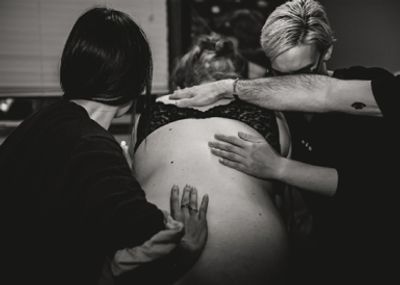
DOULAS, MIDWIVES, AND BIRTH PROFESSIONALS
Birth and postpartum professionals often understand the family’s larger story.
They may have insight into:
- pregnancy positioning
- birth history
- labor patterns
- assisted birth
- cesarean birth
- fast or prolonged labor
- early postpartum adjustment
- parent nervous system support
This context matters because babies do not begin at birth as a blank slate.
They have already experienced movement, compression, growth, constraint, birth, and transition. These early experiences can influence how a baby settles into feeding, breathing, digestion, movement, and regulation.

WHERE INFANT BODYWORK FITS
My work focuses on supporting the coordination of structures involved in feeding and early development, including:
- cranial base mobility
- cervical and jaw mechanics
- tongue movement and oral coordination
- rib and diaphragm mobility
- nervous system regulation
- postural organization during feeding
- whole-body comfort and mobility
This work is often integrated alongside lactation care, oral-motor therapy, dental evaluation, pediatric follow-up, or other provider support when indicated.
Communication between providers can help families receive more coordinated care.
professional Biography
Ruby M. Lopez is an infant bodywork practitioner focused on gentle, regulation-centered support for babies experiencing feeding challenges, body tension, oral function concerns, postural patterns, and difficulty settling.
Her work focuses on the relationship between structure, nervous system regulation, and functional development during early infancy. She supports babies and families through a whole-body approach that may complement lactation care, feeding therapy, pediatric follow-up, dental or ENT care, and other collaborative services when appropriate.
Ruby is known for a calm, baby-led approach that prioritizes safety, responsiveness, and respect for each infant’s individual pace. Sessions are designed to support greater ease in feeding, movement, comfort, and regulation while honoring the parent-baby relationship.
She is a member of the International Consortium of Ankylofrenula Professionals (ICAP) and values continuing education and interdisciplinary collaboration in the areas of infant feeding, oral function, and tethered oral tissues.
Ruby provides in-home support for families throughout Southern California by appointment.